
- Home Page
- Company Profile
-
Our Products
- Best Selling Gloves
- Rifa Safety PU102 Grey PU Coated Precision Industrial Gloves
- Rifa Safety PU103 Black PU Coated Precision Industrial Gloves
- Rifa Safety L101E Crinkled Latex Coated Industrial Gloves (Orange/Yellow)
- Rifa Safety N604 Heavy Duty Nitrile Dipped Industrial Gloves (Dark Blue)
- Rifa Safety N102A Premium Nitrile Coated Industrial Gloves (Orange/Black/White)
- Rifa Safety N101E Economical Nitrile Coated Industrial Gloves
- Rifa Safety N110EC Economical Nitrile Coated Industrial Gloves (Yellow/White)
- Rifa Safety L401 Crinkled Latex Coated Construction Gloves (Brown/Black)
- Rifa Safety L401 Crinkled Latex Coated Safety Gloves
- Rifa Safety N101A Premium Nitrile Coated Industrial Gloves (Grey/White)
- Rifa Safety N101A+ Super-Grip+ Premium Nitrile Coated Industrial Gloves (Grey/White)
- Rifa Safety BL-50-PD-1 Blue PVC Polka Dotted Knitted Gloves
- Rifa Safety N101 Nitrile Coated Industrial Gloves
- Rifa Safety 600-MGPD-1 Premium PVC Dotted Knitted Hand Gloves (Natural/Blue)
- Rifa Safety N-604 Heavy Duty Nitrile Dipped Industrial Gloves (Cut Level 1)
- Rifa Safety L101E Crinkled Latex Coated Industrial Gloves (Green/Yellow)
- Rifa Safety N111E Nitrile Fully Coated Industrial Gloves (Black/Black)
- Rifa Safety NBW-10G 10 Gauge Seamless White Knitted Industrial Gloves
- Rifa Safety ESD PU Antistatic Polyurethane Coated Precision Gloves
- Rifa Safety FPU Antistatic Polyurethane Finger Coated Precision Gloves
- Rifa Safety N602 Heavy Duty Nitrile Dipped Industrial Gloves with Hosiery Cuff (Cut Level 1)
- Antistatic ESD PU Coated Gloves
- Nitrile Coated Gloves
- Nitrile Coated Gloves Grey White Premium Quality
- N101A+ Nitrile Coated Gloves Super Grip Grey/White Premium Quality
- N604 Nitrile Supported Blue Foam Nitrile Gloves
- N101E Super Grip Grey/White Nitrile Coated Gloves
- N102A Super Grip Orange And Black Nitrile Coated Gloves
- N101U3 Super Grip Orange And Black Nitrile Coated Gloves
- N101U3 Super Grip Blue/Black Wave Nitrile Coated Gloves
- N101E Super Grip Nitrile Coated Gloves Coloured Liner & Coating
- N110 Warrier Fully Coated Nitrile Coated Gloves
- N111 Warrier Nitrile Coated Gloves
- N111 Warrier Fully Coated Nitrile Gloves
- N211 Warrier Plus Fully Coated Nitrile Gloves
- N701D Supergrip With Dots Nitrile Coated Gloves
- N701D Supergrip With Dots Nitrile Coated Gloves
- N601 Sandy Nitrile Coated Gloves
- CNS5 Sandy Nitrile Coated Gloves
- PU Coated Gloves
- PU 101 Polyurethane Coated Gloves White
- PU 102 Grey Polyurethane Coated Gloves
- PU 103 Black PU Coated Gloves
- PU102 Flex-e-PU Polyurethane Coated Gloves Grey
- PU101 Flex-e-PU Polyurethane Coated Gloves White
- PU103 Flex e PU Polyurethane Coated Gloves Black
- PU101X Diamond Grip Polyurethane PU Coated Gloves White
- PU103X Diamond Grip Black Polyurethane Coated Gloves
- PU 105 Premium Black Gloves
- PU 104 Premium Blue And Grey Gloves
- Latex Coated Gloves
- L 401 Flex-E Grip Crinkled Latex Coated Gloves Red/Black
- L 401 Flex-E Grip Brown And Black Crinkled Latex Coated Gloves
- L101E Orange And Yellow Crinkled Latex Coated Gloves
- L101E SafeGrip Crinkled Latex Coated Gloves Green/Yellow
- L101E Safe-Grip Latex Coated Gloves
- L201E SafeGrip Plus Heavy Duty Crinkled Latex Coated Gloves Cut Level 2
- L201 Safe-Grip Plus Premium Green And Yellow Latex Coated Gloves
- L 501 Flex-E Grip Wrinkled Finish Latex Coated Gloves
- CL5 Easy-Flex Latex Coated Gloves
- Anti Vibration Gloves
- Cut Resistant Gloves
- Foam Nitrile Gloves
- Industrial Latex Gloves
- Impact Resistant Gloves
- Nitrile Supported Gloves
- PVC Supported Gloves
- Knitted Dotted Gloves
- Nitrile Flocklined Gloves
- Rubber Gloves
- Nitrile Examination Gloves
- Eye Protection Spectacles
- Face Shield
- Industrial Helmet
- Coated Gloves
- PVC Coated Gloves
- Best Selling Gloves
- Contact Us

 Send Inquiry
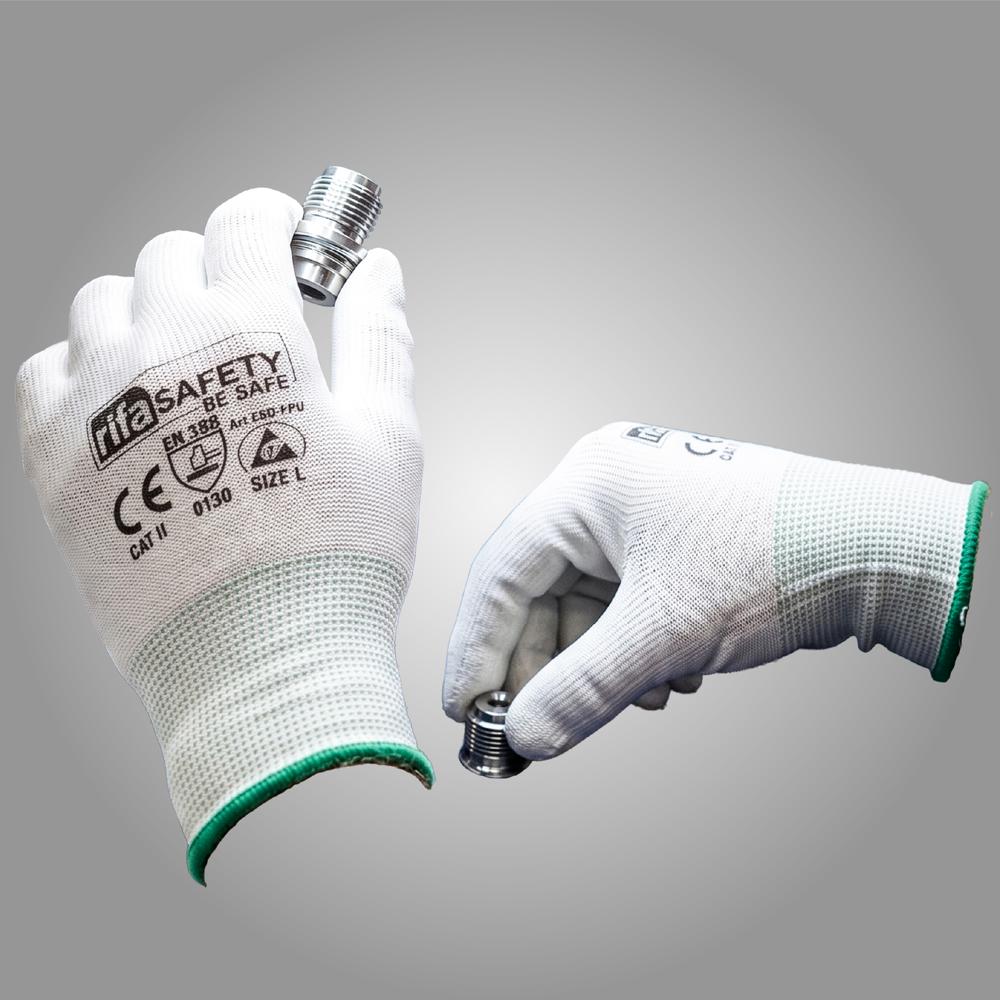
Rifa Safety FPU Antistatic Polyurethane Finger Coated Precision Gloves
Price 40.0 INR/ Pair
MOQ : 1200 Pairs
Rifa Safety FPU Antistatic Polyurethane Finger Coated Precision Gloves Specification
- Pattern Type
- Fine seamless knitted shell
- Pattern
- Fingertip Coated
- Usage
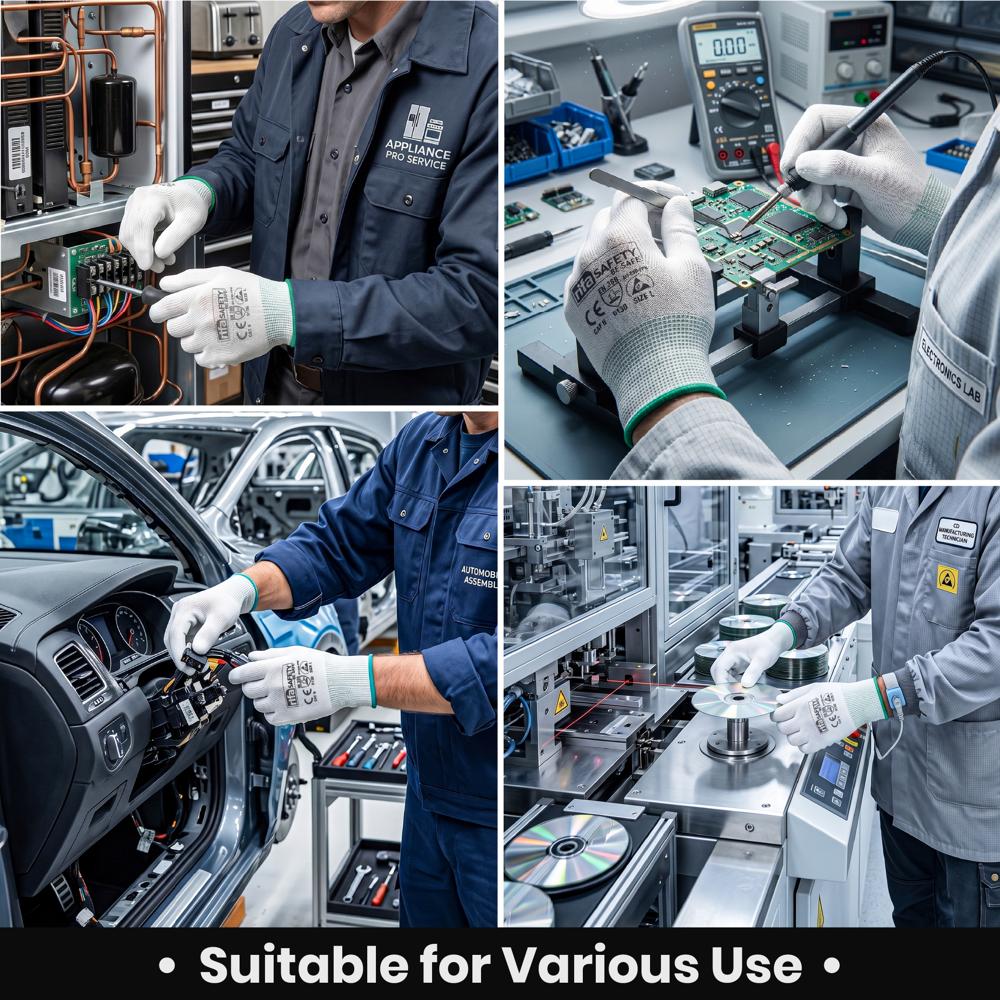
- Microelectronics assembly, laboratory instrumentation work, cleanrooms, semiconductor testing, and circuit card handling
- Gender
- Unisex
- Lining Material
- Nylon
- Size
- L (Size L / Item code 0130 printed on the glove design)
- Design
- Carbon-conductive seamless knit liner with smooth PU fingertip coating
- Product Type
- Antistatic ESD PU Coated Gloves / Cleanroom Fingertip Gloves
- Style
- Full Finger / Fingertip Coated ESD
- Color
- White/Light Green (White base liner with a light green/cyan conductive pattern near the wrist)
- Cuff
- Elasticized seamless knitted wrist with a clean green overlock border
- Material
- Polyurethane (Coating) & Conductive Carbon Yarn Blend (Liner)
- Logo Pattern
- Rifa Safety (Art-ESD-PU Series / BE SAFE)
- Feature
- Electrostatic dissipative (ESD) control, exceptional fingertip tactile precision, maximum palm ventilation, low-linting barrier
- Fabric Type
- Nylon
- Glove Type
- Other
About Rifa Safety FPU Antistatic Polyurethane Finger Coated Precision Gloves
Rifa Safety FPU Antistatic Polyurethane Finger Coated Gloves are high-performance precision work gloves designed for handling static-sensitive components, micro-assemblies, and laboratory instrumentation. Knitted with an advanced carbon-conductive filament yarn, these gloves safely dissipate electrostatic charges to shield fragile electronics from destructive static damage.
The specialized design features premium polyurethane (PU) dipping strictly on the fingertips, ensuring a highly secure, non-slip grip while leaving the palm entirely uncoated for maximum breathability and continuous ventilation. They are perfectly optimized for cleanroom operations, semiconductor testing, precise electronic repairs, optical component inspection, and circuit board assembly where tactile sensitivity, cleanliness, and ESD protection are imperative.
Exceptional ESD Protection and Comfort
These gloves combine a fine nylon seamless knitted shell and carbon-conductive yarn to create a barrier against electrostatic discharge, safeguarding sensitive components. The full finger and fingertip coated design provides maximum palm ventilation and tactile precision, making them exceptionally comfortable for prolonged use in electronic and laboratory settings.
Designed for Precision Handling and Hygiene
The polyurethane-coated fingertips not only enhance grip but maintain low-linting properties and are fully washable, supporting repeated use without compromising performance. A fitted elasticized knit wrist ensures contaminants are kept out, making the gloves suitable for cleanroom environments and various high-precision tasks.
FAQ's of Rifa Safety FPU Antistatic Polyurethane Finger Coated Precision Gloves:
Q: How do the Rifa Safety FPU gloves dissipate static electricity?
A: The gloves are made with a carbon-conductive seamless nylon liner and a polyurethane fingertip coating. This material blend allows static charges to be safely dissipated away from sensitive components, effectively controlling ESD when handling microelectronics or semiconductors.Q: What environments and processes are these gloves best suited for?
A: These gloves are ideal for use in microelectronics assembly, laboratory instrumentation work, cleanrooms, semiconductor testing, and circuit card handling. Their low-lint, antistatic properties also make them suitable for other settings needing contamination and ESD control.Q: When should I replace or wash the gloves?
A: Gloves should be washed when visibly soiled or after activities with heavy particulate exposure to maintain hygiene and functionality. Replace them if you observe any tears, loss of conductivity, or compromised fingertip coating.Q: Where can these gloves be worn outside of industrial settings?
A: Their comfort and breathability allow for use in daily life situations that demand hand protection and precise handling, such as delicate assembly work, electronics repair, or other tasks requiring tactile sensitivity.Q: What are the benefits of the breathable and low-linting design?
A: The breathable nylon liner and low-linting construction reduce hand perspiration and contamination risk, ensuring both user comfort and maintaining clean workspace environments critical in cleanroom and electronics industries.Q: How does the glove's construction enhance fingertip precision?
A: A fine seamless nylon knit shell partners with smooth polyurethane fingertip coating to maximize sensitivity and control. This enables highly accurate handling of small components, minimizing risks of slippage or contamination during precision tasks.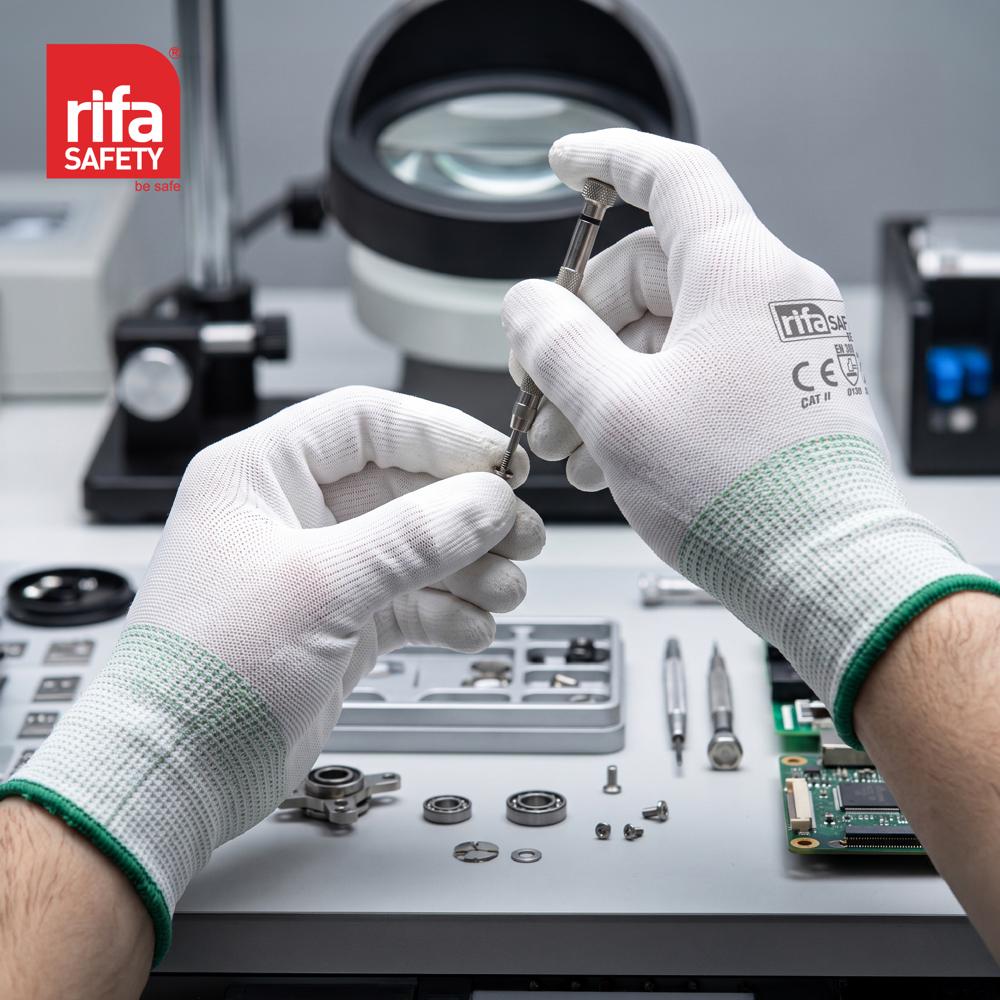
Tell us about your requirement

Price:
Quantity
Select Unit
- 50
- 100
- 200
- 250
- 500
- 1000+
Additional detail
Mobile number
Email

More Products in Best Selling Gloves Category
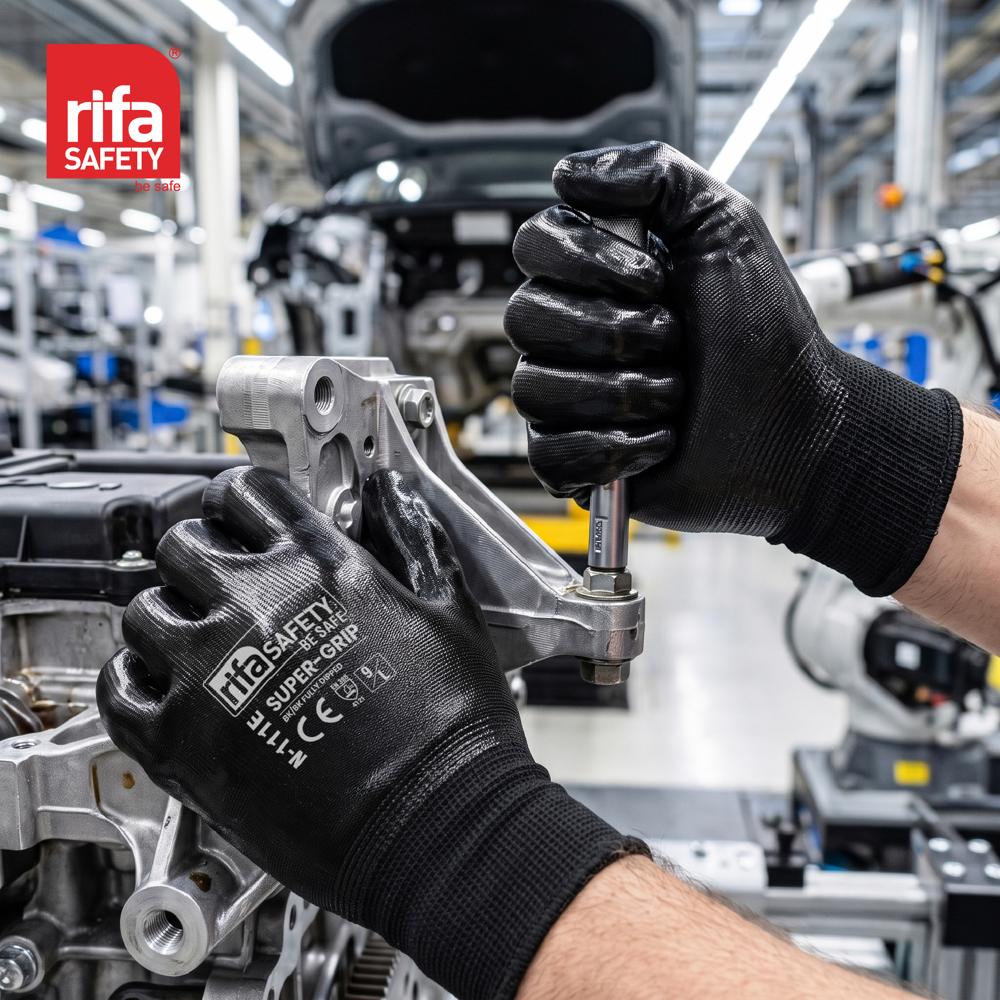
Rifa Safety N111E Nitrile Fully Coated Industrial Gloves (Black/Black)
Price 60.0 INR / Pair
Minimum Order Quantity : 1200 Pairs
Size : M, L, XL (Size 9/L shown on glove code N111E)
Product Type : Nitrile Fully Coated Gloves / LiquidResistant Safety Gloves
Design : 13Gauge seamless knit with a complete 360 fully dipped smooth nitrile barrier
Palm : Smooth, oilimpermeable black nitrile coated palm & fingertips
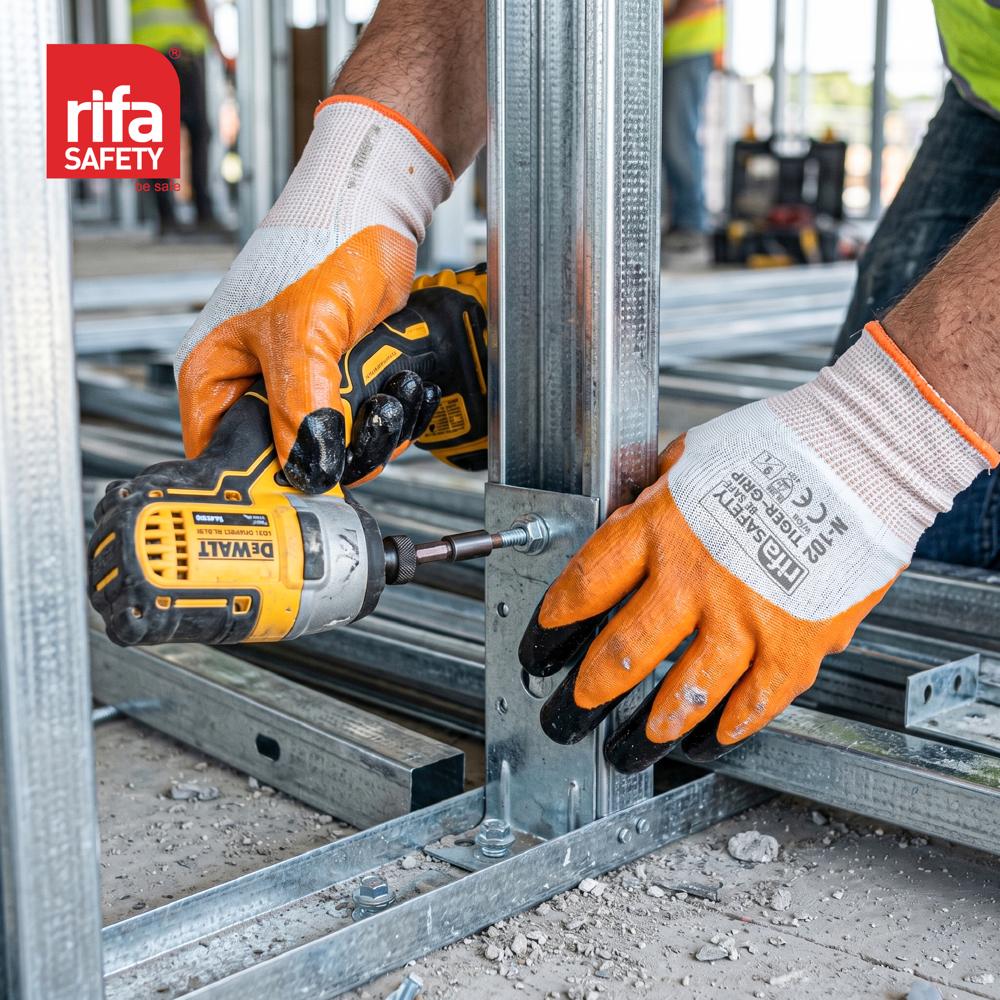
Rifa Safety N102A Premium Nitrile Coated Industrial Gloves (Orange/Black/White)
Price 30.0 INR / Pair
Minimum Order Quantity : 1000 Pairs
Size : M, L, XL (Size 9/L shown on glove code N102)
Product Type : Nitrile Coated Gloves / Premium Work Gloves
Design : Premium 3/4 nitrile dip with heavy knuckle protection and TigerGrip finish
Palm : Microtextured oilresistant black nitrile over orange base layer
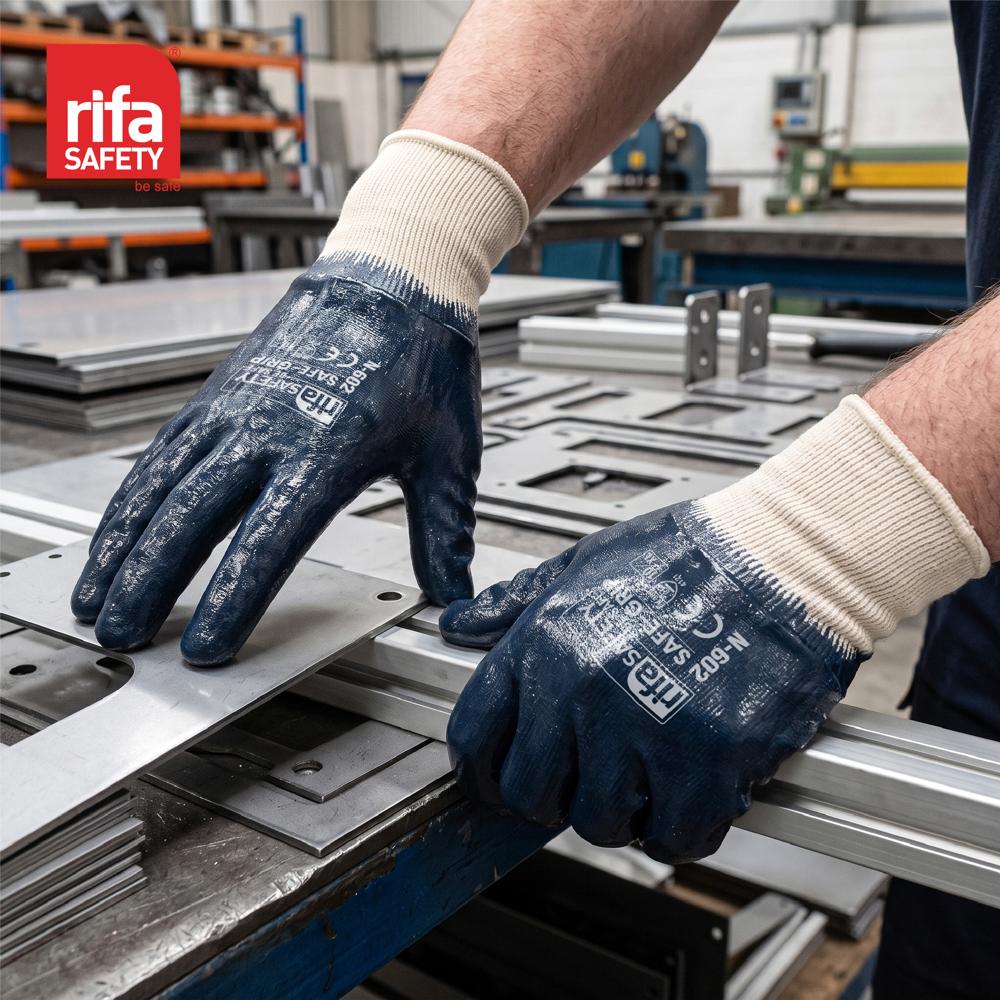
Rifa Safety N602 Heavy Duty Nitrile Dipped Industrial Gloves with Hosiery Cuff (Cut Level 1)
Price 100.0 INR / Pair
Minimum Order Quantity : 1200 Pairs
Size : L, XL (Size 10/XL shown on glove)
Product Type : Nitrile Dipped Gloves / Heavy Duty Safety Gloves
Design : Heavy nitrile dip with an integrated elasticized cotton hosiery cuff
Palm : Smooth, extratough oil and highabrasion resistant nitrile coating
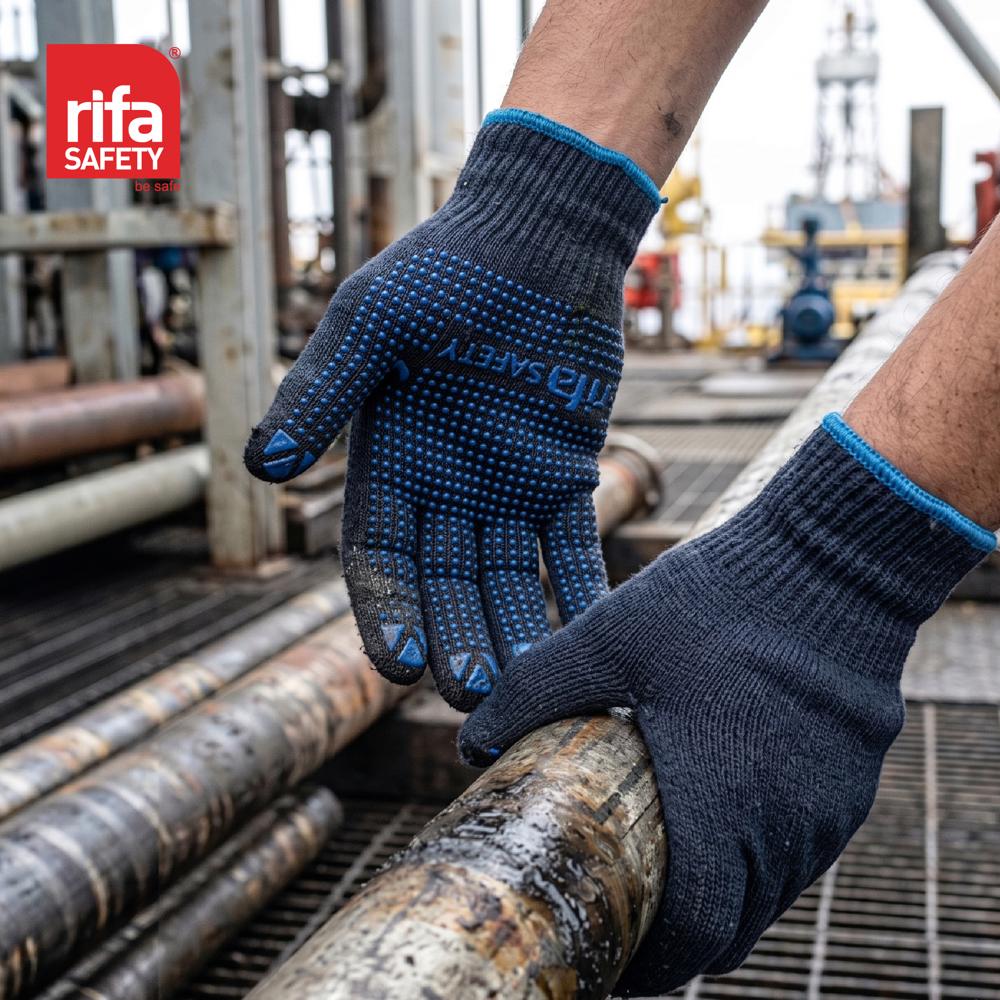
Rifa Safety BL-50-PD-1 Blue PVC Polka Dotted Knitted Gloves
Price 20.0 INR / Pair
Minimum Order Quantity : 1198 Pairs
Size : Large (L)
Product Type : Dotted Gloves / Grip Work Gloves
Design : Seamless cotton/polyester knit with singleside PVC dots & reinforced fingertips
Palm : Premium PVC polka dotted palm with protective triangular fingertip blocks

RIFA SAFETY PRIVATE LIMITED
GST : 27AAHCR1906L1Z6

- B1-506, Marathon Nextgen Innova, Ganpat Rao Marg, Opp. Peninsula Corporate Park, Lower Parel,Mumbai - 400013, Maharashtra, India
- Phone : 08045476401
Contact Us

- Mr. Meraj Farooq (Director)
- Mobile : 08045476401
-
 Send Inquiry
 Send Inquiry
Our Products
- Best Selling Gloves
- Antistatic ESD PU Coated Gloves
- Nitrile Coated Gloves
- PU Coated Gloves
- Latex Coated Gloves
- Anti Vibration Gloves
- Cut Resistant Gloves
- Foam Nitrile Gloves
- Industrial Latex Gloves
- Impact Resistant Gloves
- Nitrile Supported Gloves
- PVC Supported Gloves
- Knitted Dotted Gloves
- Nitrile Flocklined Gloves
- Rubber Gloves
- Nitrile Examination Gloves
- Eye Protection Spectacles
- Face Shield
- Industrial Helmet
- Coated Gloves
- Ear Protection
- PVC Coated Gloves
 Send Inquiry
 Send SMS
RIFA SAFETY PRIVATE LIMITED
All Rights Reserved.(Terms of Use)
Developed and Managed by Infocom Network Private Limited.
Developed and Managed by Infocom Network Private Limited.


